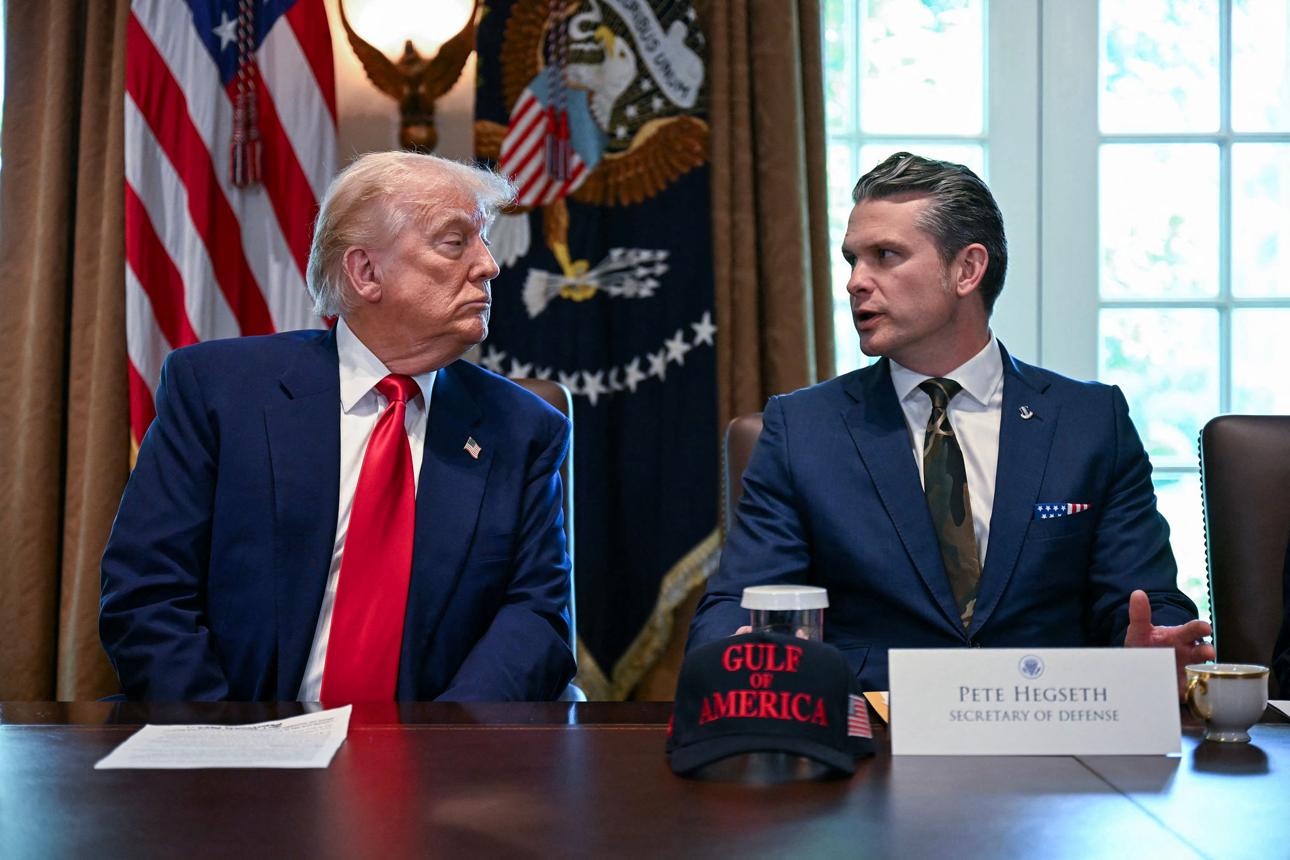
Pete Hegseth’s future is uncertain. Accountability for the Iran war should extend beyond whether Donald Trump decides to keep him.
Donald Trump is publicly standing behind Pete Hegseth after Republicans’ midterm defeat. On 5 November, he told ABC News, “I have every intention to keep him,” according to the Times of Israel’s account of the interview.
Yet CBS News reported a day earlier that Trump had been asking advisers whether his defense secretary should remain. Its sources also said he had not decided to replace him.
That is the position as it stands: public support, private consultations, and an unresolved decision. A dismissal is possible; it has not been announced.
The danger is that the argument over Hegseth’s job becomes a substitute for examining the war itself. He should answer for his decisions and the Pentagon’s conduct. But concentrating responsibility in one subordinate would offer Trump a convenient escape from scrutiny of the war he authorized.
Hegseth can deserve accountability and still become a fall guy. Those possibilities can coexist.
Public backing leaves Trump room to manoeuvre
The replacement discussion already has a name attached. One source told CBS that Florida Governor Ron DeSantis was being floated as a possible successor. The source suggested confirmation during the outgoing Congress, followed by taking office when his gubernatorial term ends in January.
That is a reported option, not a nomination. The White House told CBS that Hegseth retained Trump’s confidence.
The timing nevertheless matters. In his latest interview, Trump acknowledged that confirming a replacement would be easier during the remaining period of Republican Senate control. A personnel decision was postponed until the new Congress could face a different political environment.
My reading is that Trump has incentives pulling in both directions. Keeping Hegseth allows him to defend his administration’s record and resist demands from his opponents. Replacing him would offer a visible response to defeat and let the White House present new leadership as a correction.
Neither choice necessarily changes the war policy. A new secretary could implement substantially the same orders. Hegseth could remain while Trump changes strategy. To judge what either decision means, readers will need to look beyond the name on the Pentagon door.
The impeachment threat predates the election
Hegseth’s position is also under pressure from Congress, and that pressure cannot be dismissed as a reaction invented after the Republican losses.
Republican Representative Thomas Massie announced eight proposed impeachment charges on 15 September. They include allegations that Hegseth violated the War Powers Resolution in prosecuting the Iran war and disregarded protections intended to reduce civilian casualties. These are accusations advanced by a lawmaker, not judicial findings.
Roll Call reported that Massie intended to seek action during the week of 9 November, when the outgoing House returns. The procedural route could produce a vote on his resolution or a motion to table it. A promised vote is therefore not the same as an adopted impeachment.
Nor would impeachment itself immediately remove Hegseth. Under the constitutional process described by the Senate, the House approves articles by a simple majority; conviction and removal require two-thirds of senators present.
The Pentagon rejects the case against him. Spokesperson Sean Parnell told ABC News that Hegseth intended to serve through the end of Trump’s term, dismissing threatened investigations as partisan and denying wrongdoing.
Even without a conviction, congressional scrutiny could force a more consequential reckoning than a dismissal alone. Documents and testimony could establish what officials recommended, what warnings they received and how the administration justified continuing the campaign.
Those questions should follow the evidence through the chain of decision-making.
A declaration of victory meets the war’s consequences
There is a clear reason Hegseth’s public record deserves scrutiny. In April, he declared a “historic and overwhelming victory” over Iran. ABC’s post-election account describes the subsequent months of fighting, American military casualties, higher energy costs and pressure on US munitions supplies.
A declaration that emphatic invites a basic question: what, exactly, had been won?
Vice President JD Vance has blamed the war for the election defeat. His explanation is politically significant, but it does not establish that every Republican loss had the same cause.
The case for scrutiny is stronger than an argument about election tactics. Officials who describe military success owe the public an explanation of how that success connects to an achievable political outcome. Destroying targets does not, by itself, explain how fighting ends or how civilians become safer.
Growth Presto’s earlier examination of the risks of renewed Iran strikes addressed the gap between planning a limited operation and controlling its consequences. The personnel debate now raises a related question: would replacing Hegseth, change the assumptions behind the policy, or simply change who defends it?
Netanyahu pressed for war. Trump chose American involvement.
Israel’s role belongs in this account because there is documented evidence of its government’s influence.
In March, Reuters reported that Benjamin Netanyahu had repeatedly pressed Trump about Iran’s missiles and nuclear ambitions. An American official described seven meetings since Trump returned to office, alongside repeated calls. An Israeli official described months of joint military planning. Those accounts relied on officials speaking anonymously.
Secretary of State Marco Rubio supplied an on-the-record explanation. On 2 March, he said Washington expected an Israeli attack to bring Iranian retaliation against American forces and that the United States struck first to reduce the anticipated danger to its personnel, Reuters reported.
That rationale deserves scrutiny. It suggests that an ally’s intended action helped shape Washington’s calculation about entering a war.
Trump disputed the suggestion that Israel had forced his hand. He said he believed Iran would attack first, without publicly supplying evidence for that claim at the time, according to Reuters’ account of his 3 March remarks.
The evidence supports examining Netanyahu’s pressure, joint planning and the administration’s conflicting explanations. It does not erase American agency. Trump was responsible for deciding whether the proposed action served American interests and whether the risks justified it.
Blaming Hegseth alone would obscure that responsibility. Blaming Israel alone would do the same.
Minab must remain part of the accountability record
The stakes extend far beyond whose career survives.
The February strike on the primary school in Minab is among the gravest events requiring an answer. In September, a UN fact-finding mission cited credible independent information that 157 people were killed, including 123 children, according to Stars and Stripes’ report on its findings.
The mission found reasonable grounds to attribute the attack to US forces and concluded that it amounted to a war crime. It reported finding no evidence that the school was being used for military purposes.
Those are the mission’s findings, not a court conviction. They also do not establish that Hegseth personally selected the school as a target or ordered an attack on children. Individual responsibility requires evidence about the decisions, knowledge and conduct of those involved.
That precision strengthens the demand for disclosure.
Bloomberg reported in October that Pentagon officials intended to delay releasing the school-strike investigation until after the midterms.
The public deserves the investigation’s findings and an explanation of how the target was identified, what verification occurred and who was responsible for failures. Those obligations do not depend on Hegseth remaining in office.
The children killed at Minab should not become a passing reference in a story about Washington’s winners and losers. Their deaths are part of the record against which claims of victory—and demands for accountability—must be judged.
What Trump does next should be judged against the record
A replacement announcement would answer who runs the Pentagon. It would leave the larger questions open.
Does the administration disclose the evidence behind its decisions? Does it cooperate with congressional scrutiny? Does it change the objectives, authorization or civilian-protection practices that critics have challenged? Does it explain how further military action would produce a durable end to the conflict?
These are the tests that would distinguish a substantive change from an attempt to contain political damage.
Hegseth should face scrutiny for his own conduct. Trump should face scrutiny for his. A serious investigation can establish where their responsibilities overlap and where they differ, without allowing either man to hide behind the other.
Trump can replace his defense secretary. He cannot replace his own role in the decision to go to war.