Healthcare assistance and federal spending are openings for change. Tariffs, energy costs and the AI investment boom will remain harder to redirect.
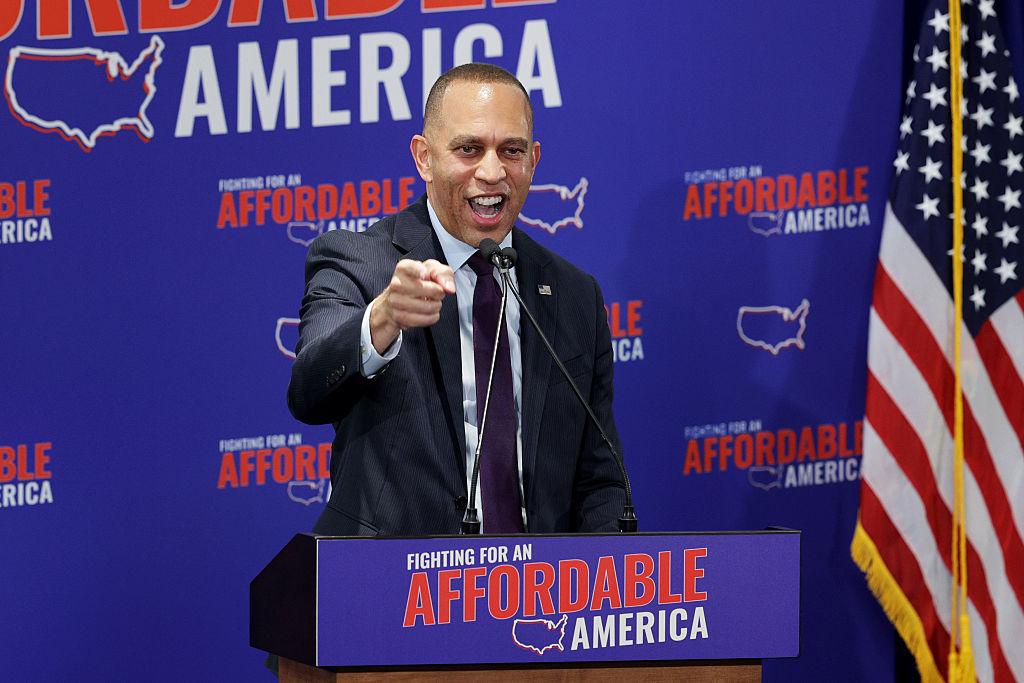
Democrats’ midterm victory gives them a stronger position to negotiate over the costs Americans face. When their House and Senate majorities take office on January 3, 2027, they will be able to shape legislation and scrutinize the Trump administration from both chambers. President Donald Trump will still hold the White House. Reuters
The economic opportunity is meaningful but uneven. Changes to healthcare assistance and food benefits could support household spending. Congressional opposition could complicate the administration’s plans. Yet translating electoral power into lower prices, stronger wages or cheaper credit will require decisions that extend well beyond Capitol Hill.
The most useful distinction is between making the economy grow faster and making life more affordable. The election could influence both, but they are different tests—and success on one does not guarantee success on the other.
The economy was growing. Purchasing power was under pressure.
The figures available before the election show why positive growth could coexist with frustration over household finances.
| Measure | Latest reading available on November 5 | What it measures |
|---|---|---|
| Real gross domestic product | 3.4% annualized growth, third quarter of 2026; advance estimate | Inflation-adjusted economic output, compared with the previous quarter and expressed at an annual rate |
| Consumer Price Index | 3.7% increase, September 2025 to September 2026 | The change in the overall consumer price level |
| Real average hourly earnings | 0.7% decline, September 2025 to September 2026; seasonally adjusted, preliminary | Average hourly pay for private nonfarm employees, adjusted for consumer inflation |
Sources: Bureau of Economic Analysis, BLS consumer prices and BLS real earnings. These measures cover different periods and should not be subtracted from one another.
Together, they describe an expanding economy in which the average private-sector hourly wage bought less than a year earlier. That average does not describe every worker, but it exposes the weakness of treating GDP growth alone as evidence that families are getting ahead.
Even a future decline in inflation would need careful interpretation. Slower inflation generally means prices are rising more slowly. Recovering purchasing power also depends on income growth and the particular expenses a household faces.
For Democrats, the challenge is therefore more specific than producing another positive GDP report: can they improve the balance between incomes and essential bills?
Healthcare offers a direct route to household relief
Health insurance assistance is one area where a legislative change can affect a recognizable monthly expense.
KFF’s October 30 analysis found that average benchmark silver premiums in the Affordable Care Act marketplaces are rising 13% for 2027. That is an increase in the underlying benchmark premium, not a prediction that every enrollee’s payment will rise by 13%. Existing subsidies cushion the increase for many people, while others face the full price. The enhanced premium tax credits expired at the end of 2025. KFF’s 2027 marketplace analysis
Restoring additional assistance could reduce what eligible households pay. The mechanism matters: a premium tax credit covers part of the insurance bill. Increasing that support can lower the enrollee’s contribution even if the insurer’s price stays unchanged. It shifts more of the financing to the federal government; it does not, by itself, reduce the underlying cost of medical care. KFF’s explanation of insurance subsidies
That would still be a tangible improvement for a household struggling to maintain coverage.
Morgan Stanley’s post-election assessment identifies opportunities to revisit ACA assistance and delay, soften or reverse some scheduled Medicaid and Supplemental Nutrition Assistance Program spending reductions. It argues that preserving benefits could support consumer spending. These are potential negotiated outcomes, not benefits already restored by the election. Morgan Stanley
The same distinction applies to food assistance. Protecting a family’s ability to buy groceries can improve its financial position without bringing down supermarket prices.
Tariffs and energy costs require a different kind of influence
Trade and energy present a less direct route from congressional victory to household savings.
Reuters’ post-election analysis identifies control over funding and borrowing as important sources of Democratic bargaining power. But Trump retains substantial executive authority over trade and foreign policy. A new congressional majority can exert pressure without being able to dictate an immediate reversal. Reuters’ economic-policy analysis
There is evidence that tariffs affect prices beyond the imported products they directly target. Research published by the Federal Reserve Bank of New York in October found that higher tariffs also raise costs for American producers using imported inputs and can allow domestic competitors to increase prices. Its analysis found that prices of US-made goods adjust over six to twelve months as costs move through supply chains. New York Fed research
That supports examining tariff relief as an affordability measure. It does not establish that removing a tariff would reverse every price increase immediately or by the same amount.
Nor would every Democrat seek identical trade policies. Growth Presto’s earlier examination of Abdul El-Sayed’s economic platform distinguished his support for targeted industrial protection from his criticism of broader tariff conflicts. A future agreement would need to specify which duties change and which remain.
Energy is especially consequential. Gasoline prices rose 9.1% in September, seasonally adjusted, accounting for more than half of that month’s increase in the overall CPI, according to BLS. BLS
Allianz’s November 4 assessment identifies renewed military escalation involving Iran as a major risk to energy prices. It also sees congressional resistance to additional funding as a possible constraint on further operations once Democrats take control. That is a potential influence over the conflict, not control over global oil supply or pump prices. Allianz Research
The AI boom could face tougher questions about who pays
The economic consequences of the election also extend to state and local government.
Morgan Stanley expects Democratic state victories to increase the risk of restrictions and delays for data centers, particularly in Texas. Its analysis notes that decisions about sites, tax incentives and many electricity arrangements sit with state and local authorities. Nevertheless, the bank expects the broader AI investment cycle to continue. Morgan Stanley
The economic test should therefore include the terms offered to developers and the costs borne by surrounding communities. Does a project pay adequately for the resources it requires? Who receives the benefits?
Stronger investment figures alone cannot answer those questions. Assessing the result requires examining both the projects that proceed and the obligations attached to them.
Budget bargaining could produce a deal—or an additional economic shock
Divided government does not make compromise impossible. It makes the terms of compromise more important.
Allianz outlines a possible bargain in which Republicans obtain additional defense funding while Democrats secure higher domestic spending and delays to health and nutrition cuts. It also warns of shutdown and debt-ceiling confrontations. Those are alternative risks and possibilities, rather than a settled legislative program. Allianz Research
A spending agreement can protect household benefits while increasing federal borrowing if lawmakers do not provide offsetting revenue or savings. Describing a measure as affordable for its recipients therefore leaves another question: how is the government financing it?
The procedures also impose limits. Under existing Senate rules, ending debate on most legislation ordinarily requires 60 votes. Trump retains his veto. Democratic control allows the party to negotiate and set priorities, rather than a guarantee that its preferred bills become law. US Senate · Allianz Research
The debt ceiling requires particular care. Treasury explains that raising it permits borrowing to meet obligations already authorized; it does not authorize a fresh spending programme. A failure to meet those obligations would create economic dangers extending far beyond the policy dispute that triggered it. US Treasury
Any concessions won through confrontation would have to be judged alongside the disruption caused in obtaining them.
Congress cannot promise cheaper borrowing
Interest rates remain another boundary on what the election can deliver.
Congress and the administration determine federal tax and spending policy. The Federal Reserve makes monetary-policy decisions independently, with objectives set by Congress. Its assessment of employment, inflation and the wider outlook determines its policy stance. Federal Reserve
That means a Democratic majority cannot simply vote to make credit cheaper. Its policies can influence the conditions the Fed considers, but lower household expenses in one area do not automatically create the conditions for an interest-rate cut.
The first test will be the terms of the legislation
Democrats now have an opportunity to turn affordability into specific choices: eligibility for assistance, the size and duration of benefits, trade restrictions and the conditions attached to public spending.
For households, the useful questions will be concrete. Does an insurance payment fall? Is coverage maintained? Does pay recover purchasing power? For businesses, the questions include whether costs and trading rules become more predictable. For the government, they include how commitments are financed.
The election changes who can demand answers and negotiate the next agreement. Its economic value will become clearer when those agreements specify who benefits, who pays and when the changes take effect.