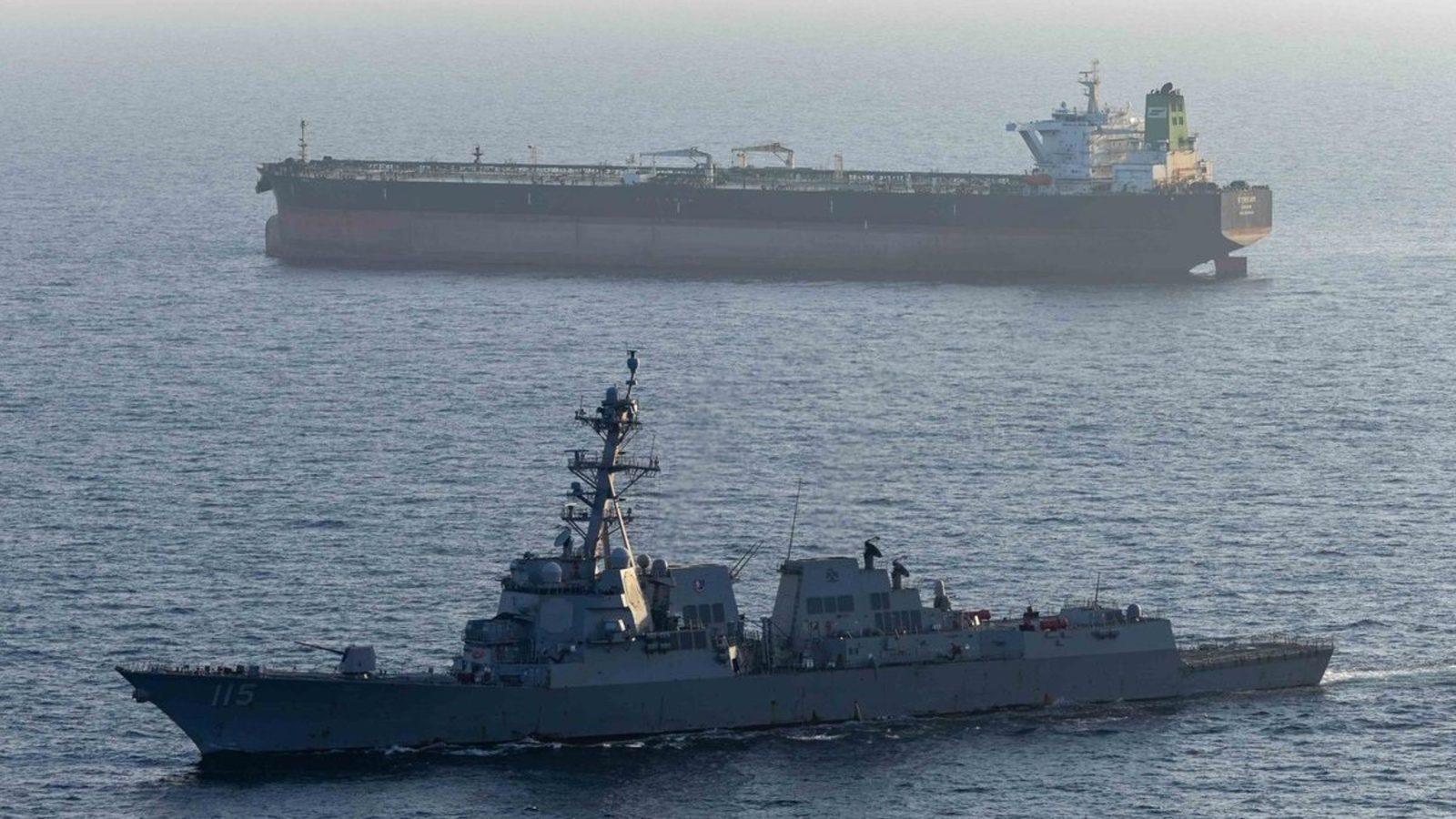
A short bombing campaign is not the same thing as a short war. That distinction matters as Donald Trump considers renewed strikes on Iran after the US midterm elections—and Gulf governments face the possibility of consequences outside their control.
On October 31, Secretary of State Marco Rubio said Trump had not decided whether to resume attacks and preferred diplomacy, Reuters reported. Military preparations should therefore not be mistaken for an announced order to strike.
The central risk is nevertheless clear: Washington might limit its initial operation without being able to limit what follows. For neighboring countries, the relevant question is not simply how long American aircraft would be involved. It is what happens to their security, infrastructure and trade if the exchange continues.
What “after the midterms” actually establishes
Anadolu’s October 28 account of Wall Street Journal reporting says Washington warned Gulf countries about a possible “short, intense military campaign” after the November 3 elections. The report described defensive deployments and preparations for potential strikes, citing officials and people briefed on the discussions.
That language describes an option being prepared. It does not establish an agreed starting date, a final target list or a reliable ending date.
The White House’s stated position, quoted in the same account, was that Trump retained options to prevent Iran from obtaining a nuclear weapon. That supplies the administration’s declared objective. It does not demonstrate that another round of bombing would achieve it.
The election connection deserves scrutiny without speculation about private motives. Reported post-election planning makes the timing newsworthy. It does not, by itself, prove that a military operation has been designed to manipulate the result.
For readers following successive headlines, three stages should remain separate: preparing an option, authorizing it and carrying it out. Evidence of the first should not quietly become a claim about the third.
Iran’s warning challenges the idea of a controlled ending
Iran’s Supreme Leader Mojtaba Khamenei ordered readiness for a response without geographic restrictions on October 31. Reuters’ Arabic-language report, republished by SWI swissinfo.ch, also reported his assertion that Iran would determine the timing and conditions for ending renewed attacks.
That is a threat and a claim of resolve, not independent evidence that Tehran can dictate the outcome. Its significance is that Iran is explicitly refusing the premise that its opponent alone would decide when an exchange stops.
Reuters also reports that Tehran has threatened US and Israeli targets in neighboring countries. That is more precise than saying Iran has announced an attack on every Gulf state.
The distinction matters for civilians. A government’s broad warning does not identify which places will be attacked, establish the credibility of every threatened capability or make harm inevitable. Nor does describing an attack as retaliation answer questions about the responsibility for the damage it causes.
But dismissing the warning as mere rhetoric would also go beyond the evidence. The prudent analytical question is which consequences a supposedly limited operation might set in motion.
The Gulf’s exposure extends beyond the first target
AP, citing two diplomats briefed on the warnings, reported that regional allies were told to prepare for possible Iranian retaliation against energy facilities and other infrastructure. The diplomats said the initial US operation could last several days while the ensuing fight could continue longer. AP also reported a UAE appeal for political solutions.
Those warnings expose three different tests of what “limited” would mean:
| Dimension | What would need to remain limited |
|---|---|
| Military operations | The duration and geographic reach of attacks and counterattacks |
| Infrastructure damage | The disruption to facilities and services, including the time needed to restore them |
| Commercial disruption | The interruption to shipping and exports, even after firing subsides |
This is an analytical framework, not a prediction that all three forms of escalation will occur. Its purpose is to prevent the duration of an initial strike from standing in for the duration of the whole crisis.
A campaign could end quickly by one measure and leave substantial problems by another. Stopping attacks does not automatically repair damaged equipment or establish that commercial routes are safe to use.
That is why the view from a neighboring country can differ from the view of the government planning the strike. The costs it must consider extend beyond whether the initial military objective is reached.
Hormuz makes regional disruption an international problem
The scale of the Strait of Hormuz helps explain the stakes. The International Energy Agency estimates that approximately 20 million barrels of crude oil and oil products passed through it each day in 2025—around a quarter of global seaborne oil trade.
Those are 2025 baseline figures, not a measurement of shipping conditions today.
The IEA identifies bypass routes in Saudi Arabia and the UAE, while noting that other regional exporters depend heavily on the strait. Alternative routes therefore provide some flexibility; they do not make all Gulf countries equally insulated from disruption.
The practical distinction is between producing energy and delivering it. An intact production facility is not enough if its output cannot reliably reach customers.
This does not justify predicting a particular oil price, petrol bill or shortage. Such estimates would require current information about flows, inventories, alternative supplies and the duration of any interruption. It does explain why the consequences of renewed fighting need not remain confined to the countries launching missiles.
Diplomacy remains a real part of the story
Iranian negotiators met Qatari mediators in Doha on October 31, according to Reuters. Separately, in an Al Jazeera interview, Foreign Minister Abbas Araghchi welcomed US outreach but said there were no current plans to meet American officials.
Contacts through mediators and an agreed direct meeting are different developments. Neither should be reported as a completed settlement.
The existence of talks also complicates the assumption that military preparations make war inevitable. Preparations may coexist with an effort to negotiate. Conversely, continued contact does not guarantee that either side will accept terms.
The most useful developments to watch are concrete ones: an announced decision on military action, mutually acknowledged negotiating arrangements, and evidence of changes in regional security or commercial traffic. Speculation about an imminent breakthrough or inevitable attack should not substitute for them.
Trump can decide whether to order another operation. He cannot make its consequences short merely by describing the intended campaign that way. Before any renewed strike, the question that deserves a public answer is how its objectives would be achieved without leaving neighboring countries—and the people living in them—to absorb an open-ended aftermath.