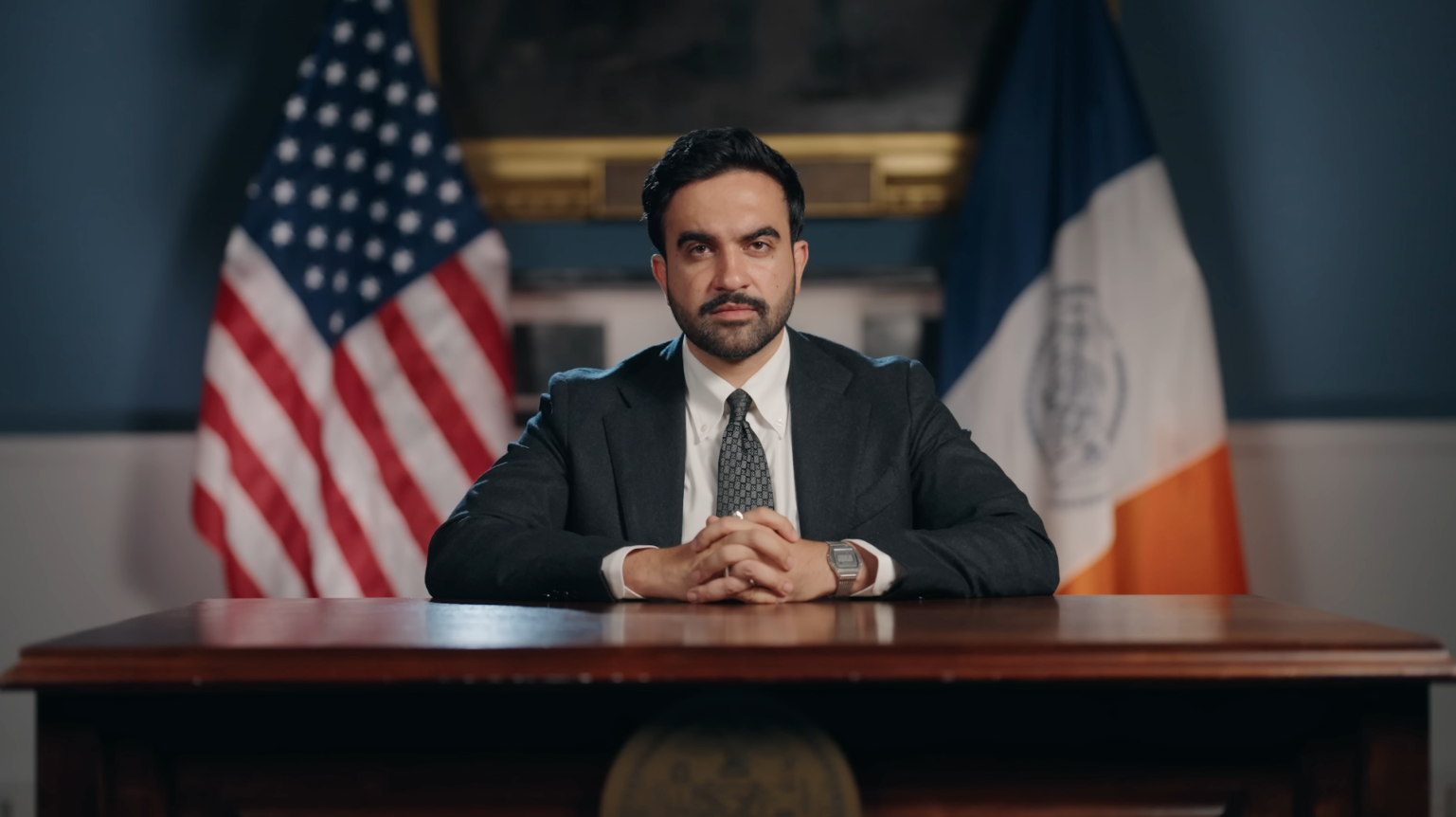
New York City Mayor Zohran Mamdani and Police Commissioner Jessica Tisch announced plans Monday, November 16, to dismantle the NYPD’s Strategic Response Group, fulfilling a campaign pledge to separate protest policing from counterterrorism. The overhaul introduces civilian dialogue workers, reorganizes police responsibilities and restricts tactics used at demonstrations, according to City Hall’s announcement.
For civil liberties groups that spent years demanding the SRG’s removal, the announcement represents a significant victory. But the creation of another police unit with crowd-management responsibilities has raised a familiar concern: whether the practices they challenged could survive the reorganization.
The New York Civil Liberties Union welcomed the decision while promising to scrutinize the replacement unit and its compliance with existing protest-policing reforms.
What replaces the NYPD’s Strategic Response Group?
The announced structure divides responsibilities among civilian staff, police dialogue officers, patrol personnel and the existing counterterrorism bureau:
| Team or division | Responsibility under the plan |
|---|---|
| Community Dialogue and De-escalation Division | Civilian coordination with protesters. Its personnel will be unarmed and have no arrest powers. |
| First Amendment Support Team | Thirty uniformed NYPD officers trained in communication and de-escalation. |
| Patrol Support Division | Crowd management and arrests when necessary, alongside predominantly patrol duties. |
| Intelligence and Counterterrorism Bureau | Takes over the SRG’s counterterrorism responsibilities. |
FAST will handle dialogue while the civilian division is being established. The plan also prohibits kettling, tear gas and long guns during First Amendment activities, bars pepper spray as a general crowd-management tool, and limits long-range acoustic devices to 90 decibels.
The distinction matters for anyone attending a demonstration: police retain an enforcement role, while the city intends to make communication and de-escalation a more prominent part of its response.
Why the SRG became a flashpoint
Created in 2015, the Strategic Response Group combined counterterrorism responsibilities with deployments at demonstrations. Its handling of the 2020 protests following George Floyd’s killing intensified demands for its dissolution, as amNewYork’s reporting recounts.
Those objections led to litigation and concrete restrictions.
In September 2023, New York Attorney General Letitia James, the NYCLU and the Legal Aid Society announced an agreement resolving lawsuits over the NYPD’s response to the 2020 protests. The cases concerned allegations of excessive force and wrongful arrests involving protesters and members of the press.
The agreement established a tiered response intended to prioritize de-escalation, with greater police intervention tied to conditions on the ground. It also restricted kettling, the practice of surrounding people and preventing them from leaving, and introduced oversight of protest policing.
A federal court authorized implementation of the agreement in February 2024. That history is essential to understanding Monday’s announcement: restrictions on kettling and requirements for de-escalation already existed. The latest plan changes the organizational structure and adds further restrictions.
Police unions and civil liberties groups see different risks
Police unions argue that dismantling the SRG could weaken the city’s ability to respond when demonstrations become dangerous. The Police Benevolent Association and Detectives’ Endowment Association criticized the decision on public-safety grounds, according to ABC7’s coverage of the backlash.
Tisch supports the restructuring. In her joint interview with Mamdani, she said the NYPD would retain its response to major crowd-control situations.
Civil liberties organizations are concerned about how that retained police capacity will operate.
The Legal Aid Society praised the decision but urged close monitoring of force, surveillance and arrests. Its support came with a clear condition: the SRG’s practices must not be repeated under the replacement structure.
Important staffing questions remain. AmNewYork reported that vetting for the Patrol Support Division would consider complaints to the Civilian Complaint Review Board and Internal Affairs Bureau. However, the administration had not specified which misconduct findings would automatically disqualify an officer or provided the new division’s staffing total.
Those details will help determine whether the overhaul produces a different approach to demonstrations.
The CURB Act could shape what happens next
Mamdani also endorsed Council Member Chi Ossé’s Communities United to Reject Brutality Act, known as the CURB Act. The NYCLU wants the Council to turn protest-policing restrictions into legislation that would be harder for a future administration to reverse.
As of November 17, the City Council’s legislative record lists the bill in committee. It has not become law.
Its current text also reaches beyond the SRG’s name. The proposed definition includes successor units with similar crowd-management or disorder-control responsibilities. That raises a concrete question for lawmakers considering the bill: how its restrictions would apply to the new Patrol Support Division.
The proposal would also require quarterly reporting on protest deployments, including arrests, uses of force and complaints.
That information would give New Yorkers a way to assess the reform through actual police conduct. Who gets assigned to the replacement unit, when officers intervene and how misconduct is addressed will determine what this announcement ultimately changes on the street.