Analysis
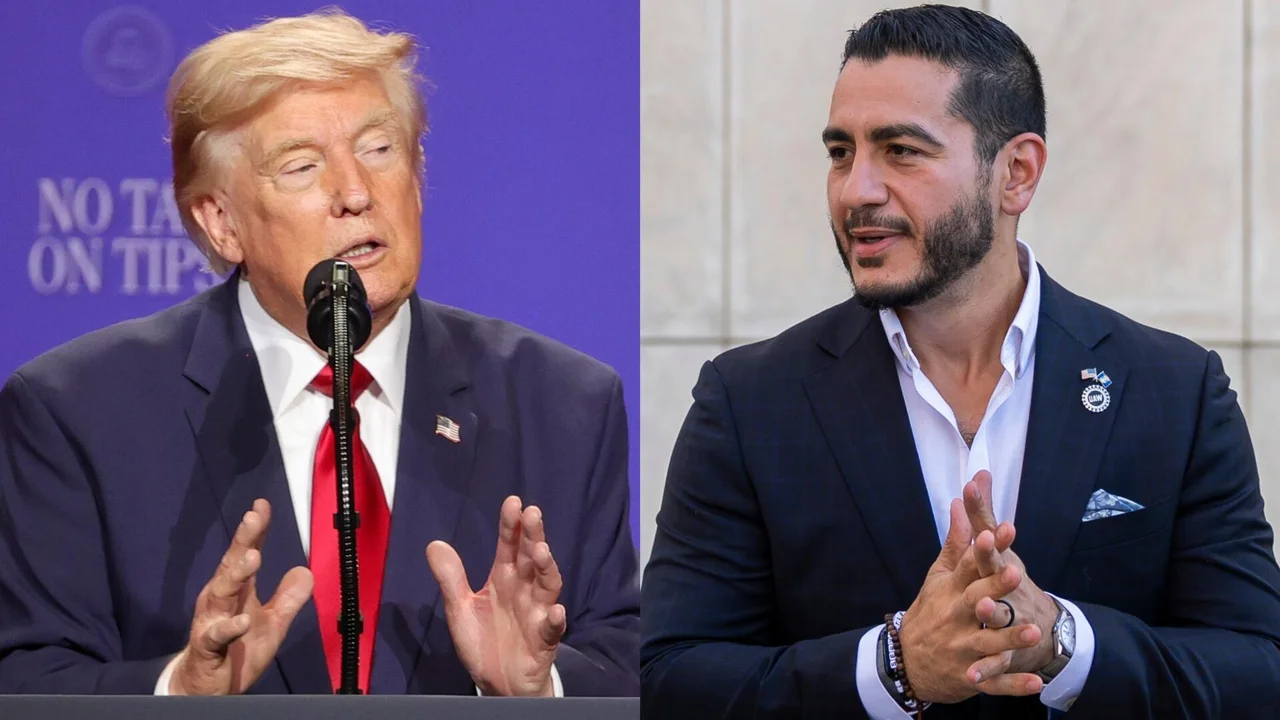
Donald Trump’s October 25 rally in Port Huron, Michigan, offered a disturbing picture of how he wanted voters to see Abdul El-Sayed: as a security threat rather than a political opponent. Trump invoked the September 11 attacks and suggested the Democratic US Senate candidate should face special metal-detector screening if elected, The Associated Press reported.
El-Sayed’s October 26 response, reported by Al Jazeera: “My name and my faith are not the reason you can’t afford your gas.”
That answer deserves attention beyond the confrontation. It challenges the relevance of the attack: what does suspicion about a candidate’s religion tell a household about the policies that would affect its bills?
The strongest version of El-Sayed’s argument takes that question seriously. Reject the unsupported allegation, then examine the economic choices he proposes. That is a more demanding standard than either religious scapegoating or uncritical applause.
Trump’s accusation fails the evidence test
Trump called El-Sayed a “jihadist Muslim Brotherhood member.” PolitiFact’s October 27 examination rated the claim Pants on Fire. It found that El-Sayed had not advocated violence to promote Islam, was not a Brotherhood member and had disavowed the organization. The White House did not supply evidence in response to the fact-checker’s inquiry.
There is legitimate material to examine in El-Sayed’s record. PolitiFact also reviewed a 2012 statement he signed supporting decisions by Egypt’s then-president Mohamed Morsi. That document warrants questions about political judgement; it does not establish the membership or violent ideology Trump alleged.
Growth Presto’s earlier examination of the town-hall controversy addressed the distinction between scrutinizing a candidate’s conduct and treating his faith as evidence against him. The president’s rhetoric in Port Huron makes that distinction more urgent.
Nor was objection to the rally rhetoric confined to Democrats. AP reported that Bishara Bahbah, a founder of Arab Americans for Trump, condemned the remarks. His reaction does not establish how anyone will vote. It does show why objections cannot simply be dismissed as partisan protection.
El-Sayed’s public positions are open to criticism. The claim that he is a violent extremist requires evidence of its own.
His affordability answer was already becoming a campaign argument
The cost-of-living response did not begin after the Port Huron rally. In an ABC News interview published October 20, El-Sayed argued that attacks on his identity distracted from household expenses. He also discussed trade and healthcare policy.
His campaign then carried the message into an advertisement. An October 28 campaign release says its “Gallons” video was released the previous day. The accompanying transcript connects petrol and grocery costs to his opposition to the Iran war and Trump’s tariffs, alongside a promise to support domestic production.
The sequence matters. An interview, a response to an attack and a subsequent advertisement point to a sustained argument about what the election should address.
The advertisement is also advocacy. Its existence establishes what El-Sayed is promising, not that every causal claim is proven or that his program would deliver a particular saving. A campaign cannot demonstrate the effect of its policies merely by listing the expenses people struggle to pay.
That leaves a useful next question: what would change under the approach he supports?
On tariffs, the distinction is selective protection—not abolition
Describing El-Sayed simply as anti-tariff would misrepresent his position.
His published trade platform supports targeted tariffs intended to protect developing industries. It calls for clear benchmarks with trading partners and for tariffs to expire as American manufacturers establish themselves. In the ABC interview, he identified Chinese electric vehicles as one category where he supported protection while criticizing Trump’s tariff conflict with Canada.
That distinction creates a substantive debate. Which imports would face duties? What would count as success? When would protection end? How would a proposal balance manufacturing jobs against costs faced by businesses and consumers?
Those questions need product-specific evidence and a defined policy. The platform’s principles alone cannot establish a household saving, and this article does not calculate one.
But they give an opponent something meaningful to challenge. A disagreement over which tariffs to keep is an argument about governing. An insinuation about El-Sayed’s religion supplies no answer to it.
Healthcare offers a second test of the promise
El-Sayed’s healthcare platform proposes universal Medicare coverage without premiums, copayments or deductibles. It also supports expanding prescription-drug price negotiations beyond their existing reach and investing in public healthcare facilities.
These are proposals, not benefits available because he has announced them.
The absence of an insurance premium would not, by itself, establish that a household pays less overall. A meaningful comparison would need to account for financing, taxes, coverage and out-of-pocket spending. The published commitments cited here do not provide a household-specific calculation.
There is also a distinction between his destination and his immediate legislative priorities. Asked by ABC about feasibility, El-Sayed acknowledged that Medicare for All might require intermediate steps. He described expanding access, reducing corporate power and increasing public provision as moves in that direction.
That acknowledgement deserves follow-up: which measure would he pursue first, what would it cost, and how would he build support for it?
Taking those questions seriously treats him as a prospective legislator. It is precisely the kind of scrutiny that a campaign dominated by insinuation displaces.
The debate should leave voters with something they can judge
Michigan’s official candidate listing identifies El-Sayed and Republican Mike Rogers among the candidates for the November 3 Senate election. Their records and proposals deserve examination on their merits.
El-Sayed’s response offers a sound starting point: his faith is not an explanation for the cost of living. Supporting that argument does not require accepting every economic claim his campaign makes. It requires refusing to let an unsupported accusation replace a policy debate.
His critics can challenge his trade policy, healthcare financing or foreign-policy judgment. They should identify the decision they oppose and explain the alternative.
Trump’s attack asks voters to fear who El-Sayed is. The more useful question is what he—and the people running against him—would do with power.