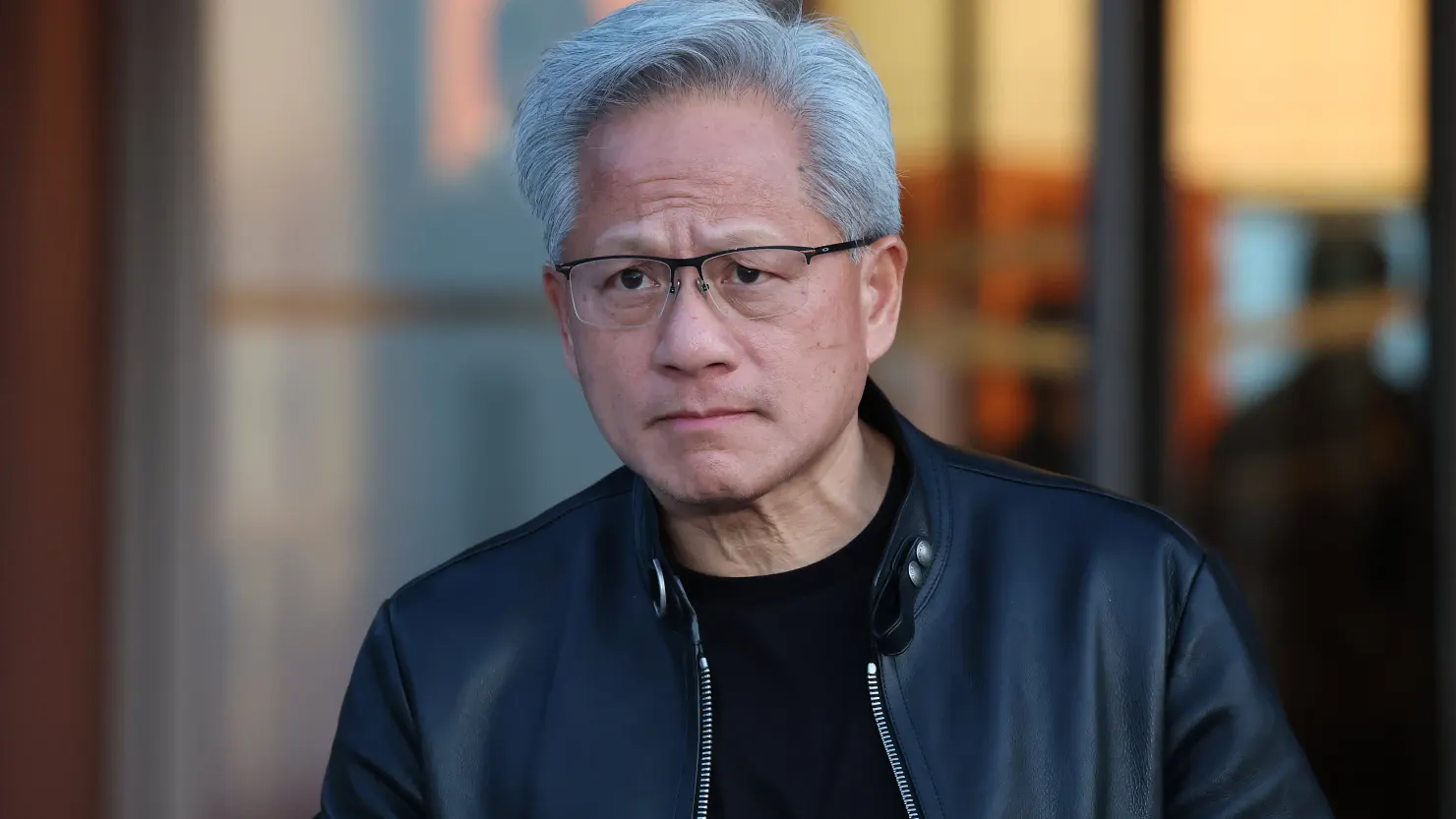
On November 11, The New York Times reported that Jensen Huang had a relationship with an Nvidia executive who reported to him. The Wall Street Journal separately reported that Nvidia’s board was preparing to remove its founder and chief executive, with directors potentially meeting that day to determine his future.
Reuters relayed the Times’ allegations and, separately, the Journal’s report about the board. Neither report amounted to an announced dismissal.
The developments put Nvidia’s directors at the center of the story. They must establish what happened, decide what it means for Huang’s leadership and explain whether the company’s safeguards worked. Nvidia’s own published rules provide a useful starting point for judging that response.
What Huang has admitted—and what remains alleged
Huang acknowledged marital infidelity in a November 8 email that Nvidia published on its website. “I was unfaithful to my wife,” he wrote, apologizing to his family and colleagues and promising to cooperate with the board’s investigation. The published message did not identify the other person or describe a workplace relationship.
The November 11 report introduced a separate allegation. According to Reuters’ account, the Times cited five people who had worked at Nvidia and identified the executive as Kimberly Powell, its vice president of health care. Nvidia had not immediately responded to Reuters’ request for comment. Reuters’ account of the new report.
An admission of infidelity does not confirm every subsequent allegation. Nor does a reported relationship establish that a promotion, payment or business decision was improperly influenced. Those are questions for evidence, including records and testimony, rather than assumptions about either person.
The distinction matters because the board’s initial investigation had a different stated focus. Its November 8 announcement concerned reports that Huang had been targeted by a foreign intelligence effort. Directors said they had no reason to believe national security or Nvidia’s secrets had been compromised while committing to examine the available information.
That was the board’s stated understanding when it opened the inquiry. It was not a completed investigation’s finding.
Nvidia’s conduct rules make this a company question
The public Nvidia Code of Conduct, linked from its company policies page, applies to every employee and board member. It identifies personal relationships among activities that may create a conflict of interest.
The code says people should avoid actual or potential conflicts between personal gain and their obligations to Nvidia, remove themselves from affected decision-making when conflicts arise, and seek guidance from Employment Legal. It also provides protection against retaliation for people raising concerns.
Those provisions give the board concrete questions to resolve if the reported relationship is substantiated. Was it disclosed through the appropriate channels? Were decisions involving the executive handled by someone without a conflict? Could employees raise concerns safely?
A relationship within a reporting line makes authority over assignments, compensation and advancement relevant to the inquiry. That does not establish that any of those powers were abused. It explains why the company needs an answer beyond whether the people involved considered the relationship private.
The published code also says waivers require written approval from the Compliance Committee, with waivers involving executive officers or directors disclosed in accordance with applicable requirements. No waiver should be presumed here. If Nvidia relies on an exception, its basis would be another matter to explain.
The board has hired investigators. Their remit now matters.
On November 10, Nvidia’s independent directors announced that they had retained former acting U.S. Attorney Joon H. Kim and his firm, Wachtell, Lipton, Rosen & Katz, to conduct the investigation. That appointment is confirmed in the company’s statement.
Outside investigators can help establish a credible record. The brief announcement, however, does not describe a separate review of the subsequently reported workplace relationship or explain what findings will be made public.
The two sets of questions should remain distinct. An inquiry could find no compromise of confidential information while still identifying a workplace conflict or a failure to disclose one. Equally, evidence of a personal relationship would not, by itself, prove an intelligence breach.
For shareholders and employees, an informative update would therefore explain the scope of the review, the standards being applied and any measures taken while facts remain unresolved. It should also address what directors themselves knew and when they knew it.
Nvidia’s corporate governance policies assign the board responsibility for monitoring management’s effectiveness and overseeing risk. An investigation of the chief executive can consequently raise questions about the systems that were supposed to oversee him.
Independence has to be demonstrated through decisions
Nvidia’s 2026 proxy statement says the board determined that its directors other than Huang met Nasdaq’s independence standards. It describes a structure led by an independent lead director rather than a chairperson, with meetings of independent directors held without the CEO.
Those are meaningful formal arrangements. They do not tell readers how directors handled any particular concern involving Huang.
The practical test is whether directors obtain information independently, challenge incomplete explanations and apply company standards consistently. Their response also needs to remain open to evidence that contradicts the allegations. A credible inquiry cannot begin with either a guaranteed dismissal or a guaranteed vindication.
The board expressed confidence in Huang on November 8. Any subsequent leadership decision needs a clear, dated explanation. Investors should be able to distinguish the board’s current position from assurances issued before the newest allegations.
Strong results do not settle the leadership decision
There is a substantial business to preserve. Nvidia reported revenue of $96.2 billion for the quarter ended July 26, 2026, more than double the year-earlier figure. Data Center revenue was $89 billion, according to its August earnings release.
Those results explain the commercial stakes. They cannot establish whether an executive complied with company rules, just as allegations about an executive do not automatically establish that demand for the company’s products has weakened.
Reuters reported Nvidia shares down about 8% in after-hours trading following the November 11 developments. That was a trading snapshot, not the regular-session closing result or a measure of damage established by an investigation. Reuters’ market update.
Growth Presto’s earlier analysis of Cramer’s Nvidia valuation argument examined confidence in future earnings. This episode adds a different uncertainty: confidence in the people and processes responsible for delivering them.
A leadership decision therefore needs a continuity plan as well as an explanation. If Huang remains, directors should explain the safeguards supporting that choice. If he leaves or steps aside, they should explain who holds authority and how the business will operate through the transition. The absence of a publicly named successor does not prove that no confidential plan exists.
Huang’s record of building Nvidia makes this a consequential decision. The board’s responsibility is to make it on evidence—and to show employees and shareholders that the company’s rules retain their force when the person under scrutiny is its founder.