Commentary
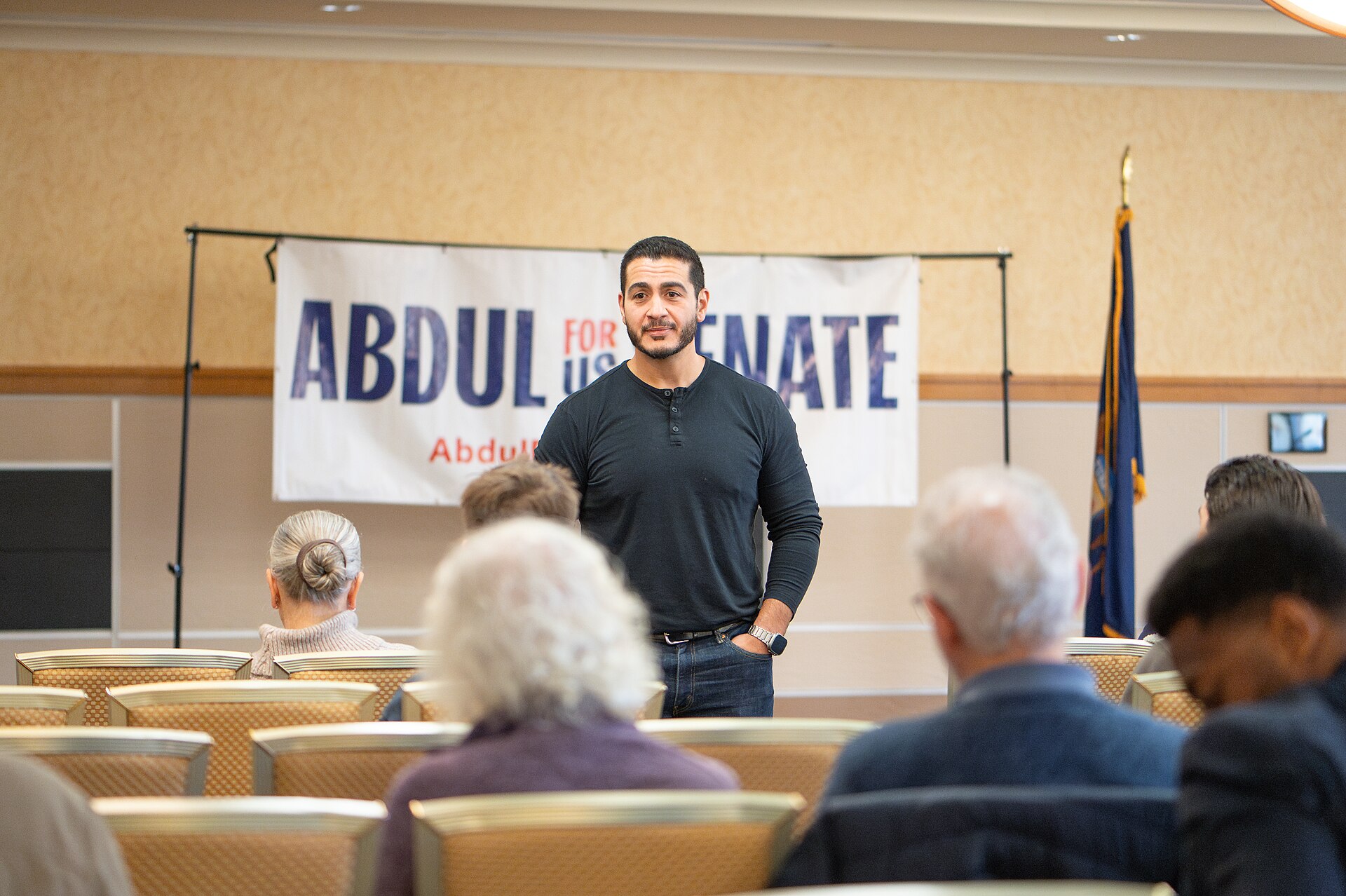
At a town hall in Caro, Michigan, on 17 October, Democratic US Senate candidate Abdul El-Sayed was asked to disavow the Muslim Brotherhood. He did. Then he challenged the assumption behind the question.
That sequence matters. In the excerpt transcribed by CNN the following day, El-Sayed answered affirmatively before asking why the questioner thought he might refuse. His objection came after his answer. It did not replace it.
The strongest defense of El-Sayed starts there. Candidates should face difficult questions about their beliefs, associations and judgement. Those questions should identify something the candidate has actually said or done. A Muslim candidate should not have to establish his innocence of an affiliation that his critics have not established in the first place.
The answer came before the argument
The distinction became especially important when Republican opponent Mike Rogers appeared on CNN on 18 October. Rogers said, “He didn’t disavow it.” Host Dana Bash immediately pointed out that El-Sayed had said yes.
The transcript does not settle every dispute about El-Sayed. It does settle that narrow one: the claim that he failed to disavow the organisation is contradicted by the answer CNN aired.
A viewer can dislike his response to the questioner. Another can welcome his refusal to accept the premise. Neither reaction changes the order of events.
That is a basic obligation for anyone covering this confrontation: preserve the answer when describing the argument. Otherwise, a candidate’s objection to being treated as suspect becomes evidence that he refused to answer, even when he answered plainly.
His record is fair ground. Inherited suspicion is not.
There is context that a defence of El-Sayed should acknowledge. Bridge Michigan’s 19 October reporting described older social media posts by his half-sister alleging family connections to the Brotherhood. El-Sayed has denied ties himself and said he had never discussed the organization with his mother. Rogers has characterised his criticism as concerning ideology rather than religion.
A journalist can reasonably ask El-Sayed to clarify what he knows about those family claims, particularly when assessing the accuracy of his own statements. But relatives’ alleged associations do not, by themselves, establish his membership, allegiance or intentions.
His own published arguments are a different matter. In a September fact check, Bridge examined his 2011 commentary supporting Egypt’s revolution and a 2012 group statement defending then-president Mohamed Morsi. Its review found no evidence that El-Sayed had pledged support to the Brotherhood.
That finding leaves room for serious scrutiny. The 2012 statement reproduced by Al-Ahram, which Bridge connects to El-Sayed, backed Morsi’s decisions while also expressing concern about concentrating powers in the presidency. It sought an assurance that those exceptional powers would end once a constitution was completed.
A substantive follow-up would ask whether El-Sayed still defends that position, what he learned from it and how he would assess similar claims of exceptional executive power today. Those questions concern political judgement. They can be asked with a document in hand.
The distinction is consequential: an argument about a candidate’s actual words can be examined and answered. An insinuation about his hidden loyalties can survive every denial because its premise is that he cannot be trusted.
Three standards for a fair question
There is a practical way to distinguish accountability from suspicion without pretending to know what is in a questioner’s heart.
Identify the conduct. A question should name the statement, action or relationship that creates the concern. Asking a candidate to explain a signed political statement gives him something specific to defend or reconsider. Treating a religious identity as evidence of affiliation skips that essential step.
Establish the connection. If the concern involves someone else, explain its relevance to the candidate. A relative’s beliefs, an acquaintance’s remarks and a candidate’s own commitments are different categories of evidence. Moving between them requires proof.
Allow the answer to count. A denial does not end an investigation when credible contradictory evidence exists. But if a candidate answers a disavowal question affirmatively, the next claim cannot truthfully be that he refused. Further questioning should identify the remaining contradiction.
These standards also constrain El-Sayed’s supporters. They should not assume that everyone asking about his record is motivated by religious prejudice. They should identify the unsupported inference or factual error and explain it. A defence of equal treatment becomes stronger when it applies the same evidentiary discipline to both sides.
The question is therefore not whether candidates may ever be asked about extremism. They may. It is whether the question rests on evidence about the candidate—and whether the response is reported honestly.
The Kennedy comparison has a precise meaning
El-Sayed invoked John F. Kennedy in responding to the controversy, according to Bridge. The useful comparison is about the basis on which citizens judge a candidate.
In his 12 September 1960 address to Protestant ministers in Houston, Kennedy asked to be judged by his public record and declared positions rather than statements attributed to Catholic authorities. He also explained how he would exercise public responsibility independently.
That history does not make the two campaigns identical. Nor does it equate a church with the Muslim Brotherhood. It identifies a recurring problem: substituting an assumed collective allegiance for evidence about an individual seeking office.
The constitutional distinction also deserves care. Article VI of the US Constitution prohibits religious tests for federal office. As the National Constitution Center explains, that prohibition governs government action; it does not make a voter’s religious preferences unconstitutional. A hostile town hall question is not itself a violation of Article VI.
The broader democratic argument is about the standard citizens choose to uphold. Candidates should explain how they will protect equal rights and discharge their duties. They should not have to apologize for belonging to a faith before their answers can be heard.
Religious conviction can inform a person’s conscience. The public question is how that person will use public power, including toward people who do not share those convictions.
Give his policy promises the scrutiny they deserve
Defending El-Sayed against unsupported allegations does not require giving him an easier campaign.
His Medicare for All proposal calls for universal coverage, including dental, vision and hearing care, without premiums, copayments or deductibles. Those are campaign commitments, not benefits that voters can already claim.
They invite demanding questions. How would the financing distribute costs across households? What would happen during the transition from existing coverage? Which provisions could he persuade enough senators to support, and what compromises would he accept?
Those questions give voters something concrete to evaluate. An answer can reveal whether a promise is developed, whether a trade-off has been acknowledged and whether the candidate has a plausible legislative strategy.
The same standard should apply to his foreign-policy judgement, his past statements and his treatment of people who disagree with him. Supporters should welcome scrutiny that helps voters understand what an El-Sayed senatorship would mean.
What they should reject is a process in which his religion supplies the suspicion, other people’s alleged beliefs supply the evidence, and his own answer disappears from the account.
El-Sayed answered the question. The next question should advance the public’s understanding of what he would do with power.